Book Box Reading Competitions 2026
Book Box Reading Competitions 2026
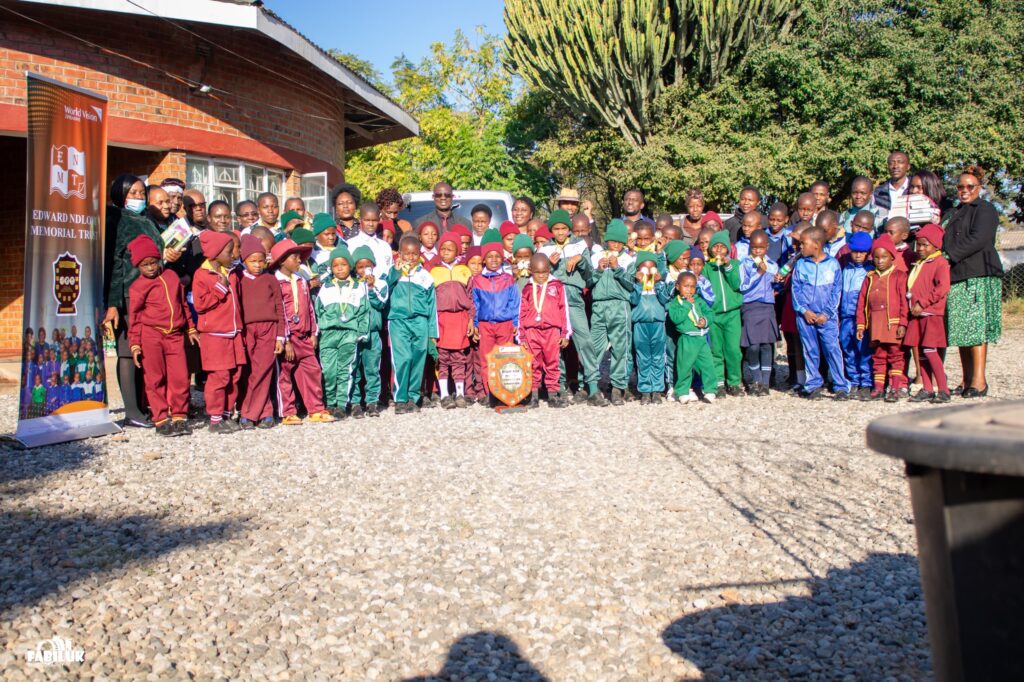
Readers Today, Leaders Tomorrow: Sengezane Primary Crowned
Champions of the 2026 ENMT Book Box Reading Competitions
A Season of Reading Comes to a Triumphant Close
From the first spelling bee to the final round of applause echoing through the Edward Ndlovu
Memorial Library on 17 July, the 2026 Book Box Reading Competitions were a season-long
celebration of literacy, resilience, and community. What began as small classroom contests in 37 rural
partner schools grew, week by week, into a district-wide showcase of talent, culminating in Sengezane
Primary School lifting the District Floating Shield as the overall champion.
Organised by the Edward Ndlovu Memorial Trust (ENMT) in partnership with World Vision
Zimbabwe’s Mzimuni Area Programme, the competitions were designed with a clear purpose. It was
to promote the effective use of Book Boxes distributed to rural schools and to nurture a stronger, more
joyful reading culture among learners who might otherwise have limited access to books. Judging by
the energy, dedication, and sheer talent on display over the course of the competition, that purpose
was met many times over.
From Classrooms to Clusters
The journey to the district finals started at the most local level possible. Throughout June, individual
classes and schools ran their own internal Book Box reading competitions, giving every learner a
chance to test their skills before the stakes were raised. These school-level rounds served as the
foundation for everything that followed, identifying the readers, spellers, and word-builders who
would go on to represent their schools at cluster level.
With 37 rural partner schools involved, schools were grouped into six clusters spanning two broad
regions. Gwanda North and Mzimuni, and Gwanda South and Gwanda South East. Each cluster
would produce a single winner, and those six winners would then advance to the district finals at the
library. The cluster competitions ran from 6 July to 17 July, with a new cluster taking its turn on the
stage almost every day.
The Three Age Categories
To make sure every learner competed on a level playing field, the competitions were divided into
three categories. They were: Infants, covering ECD B through Grade 2; Juniors, covering Grades 3
and 4; and lastly, Seniors, covering Grades 5 to 7
Across these categories, learners took part in a wide variety of literacy activities. Namely, picture
identification, word building, picture-word matching, general knowledge quizzes, spelling bees,
isiNdebele reading, English reading, spelling relays, and vocabulary bees. Some clusters also
introduced fun variations like puzzle solving and “word fishing,” keeping the format fresh and
engaging as the competitions moved from venue to venue.The Road to the Finals
Day 1 – Cluster 1, Nkazhe: 6 July
The competitions kicked off on 6 July at Nkazhe, with seven schools going head-to-head:
Matshetsheni, Matshiya, Nkazhe, Magedleni, Datata, Dambashoko, and Matsholomotshe Primary
Schools.
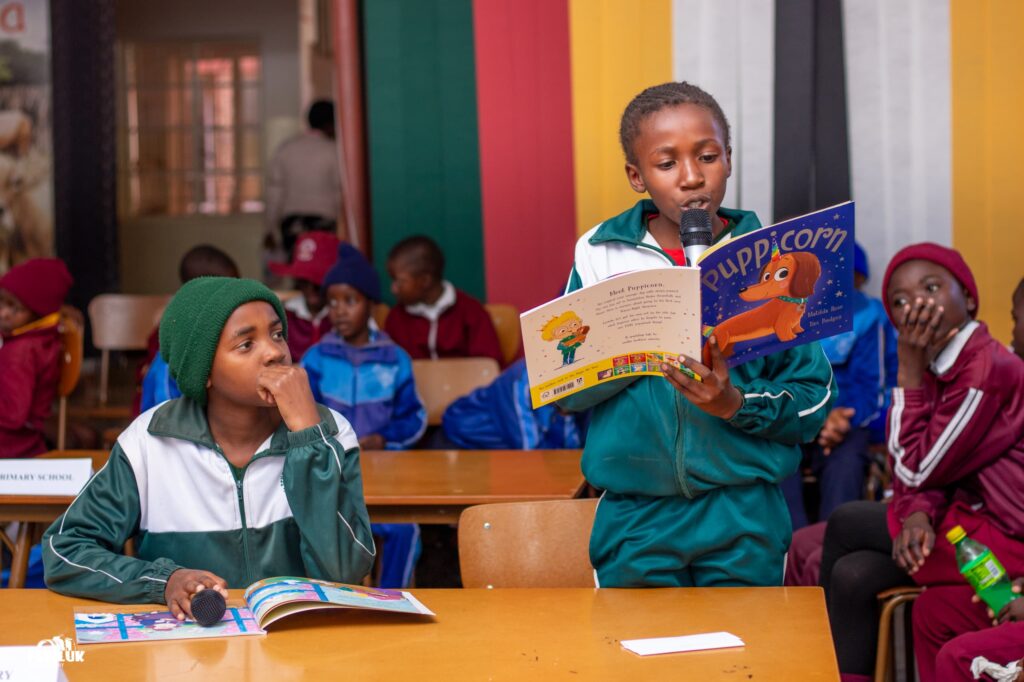
A total of 63 children and 7 teachers took part in a day filled with picture word matching, puzzle
solving, spelling bees, word fishing, and reading challenges.
It was a nail-bitingly close contest. In the end, Dambashoko Primary School edged out
Matsholomotshe Primary by a single point to claim the first cluster title of the season and punch their
ticket to the district finals.
https://www.facebook.com/share/18yrxgSWZH/
Day 2 – Cluster 2, Singukwe: 7 July
The second cluster brought together six schools at Singukwe: Sinkukwe, Lumene, Stanmore,
Enyandeni, Glassblock 1, and Glassblock 2 Primary Schools, with 45 children and 5 teachers
participating.
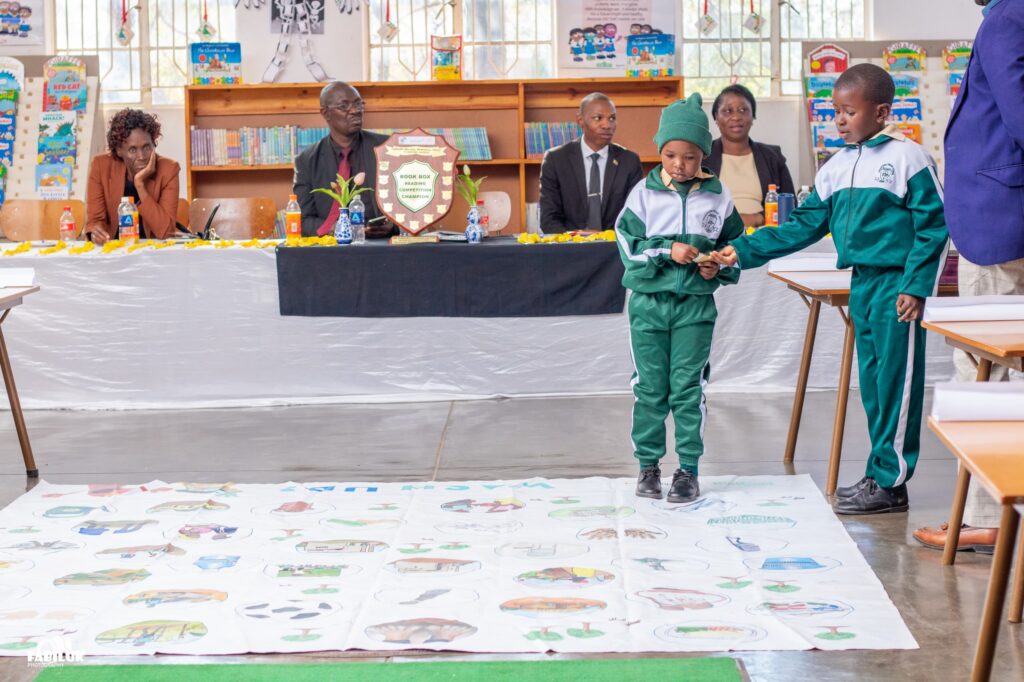
Lumene Primary School stole the show, dazzling judges and spectators alike with an outstanding
performance in the Infants category. Their dedication and brilliance earned them a well-deserved
place among the district finalists.
https://www.facebook.com/share/p/1GJm149SeA/
Day 3 – Cluster 3, Zhukwe: 8 July
Cluster 3, hosted at Zhukwe, featured five schools: Zhukwe, Silikwe, Mkwidzi, Shake, and Wilikisa
Primary Schools, with 54 children and 6 teachers competing.
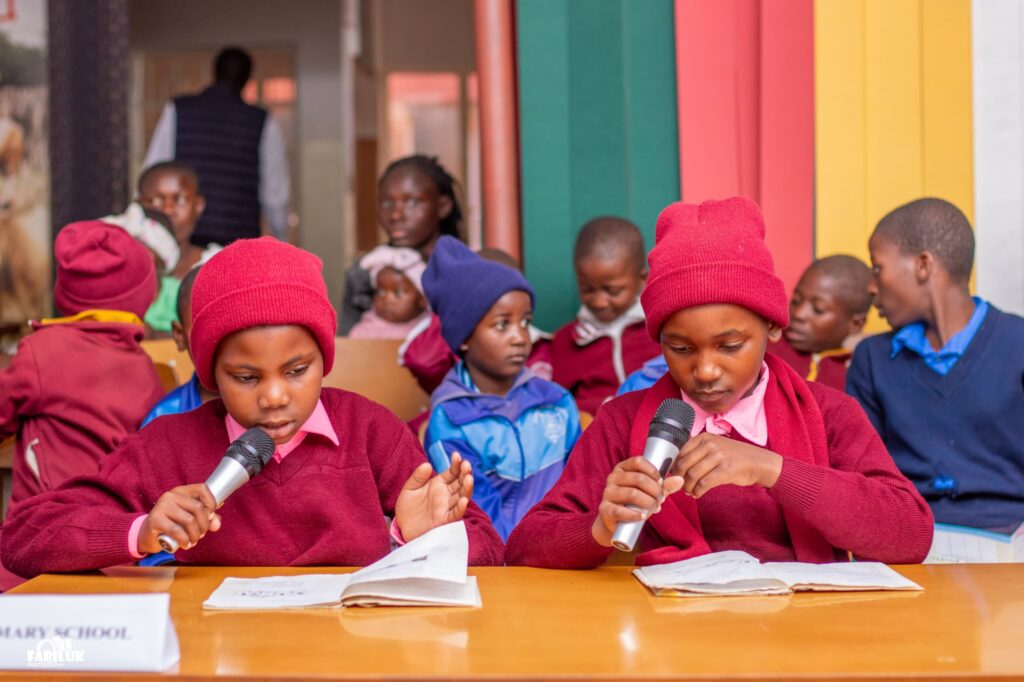
This was one of the closest contests of the entire competition, with all five schools separated by the
narrowest of margins. When the dust settled, Wilikisa Primary School had edged ahead to secure their
spot in the district finals, capping off an inspiring display of reading passion from every school
involved.
https://www.facebook.com/share/p/14kunVV1qxS/
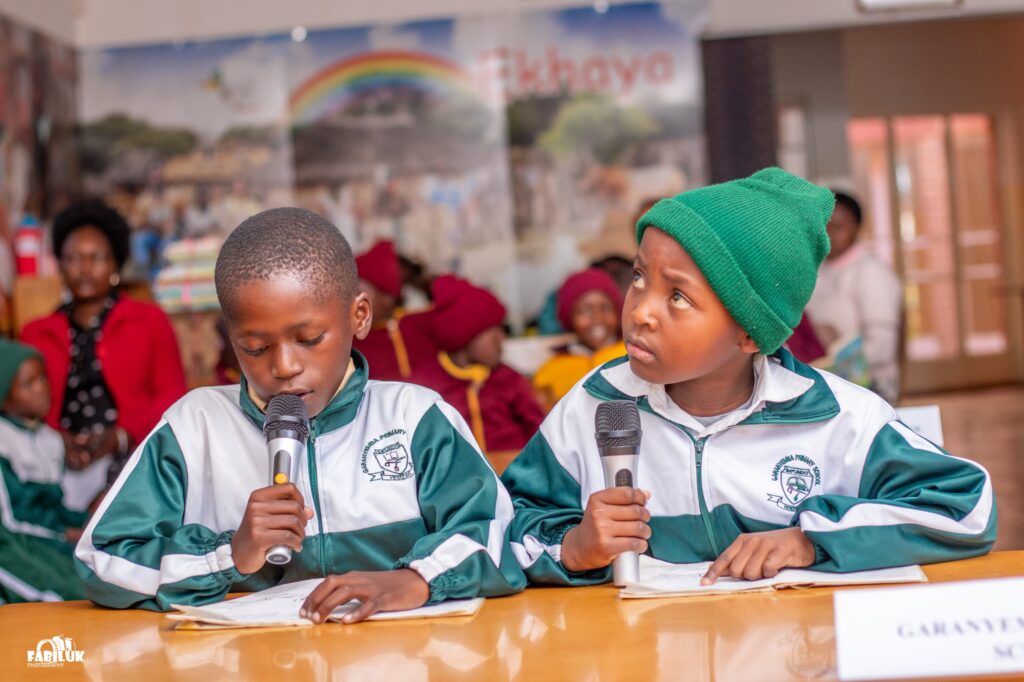
Day 4 – Cluster 4, Garanyemba: 9 July
The action then shifted south for Cluster 4 at Garanyemba, where defending champions Garanyemba
Primary School faced Nsimbi, Mtandawenhema, Paye, Mawane, and Switsha Primary Schools, with
54 children and 6 teachers taking part.Garanyemba proved once again why they were the reigning champions, putting in a commanding
performance to retain their cluster title and secure their place at the district finals, where they would
have the chance to defend their crown.
https://www.facebook.com/share/p/19BY9mMwAL/
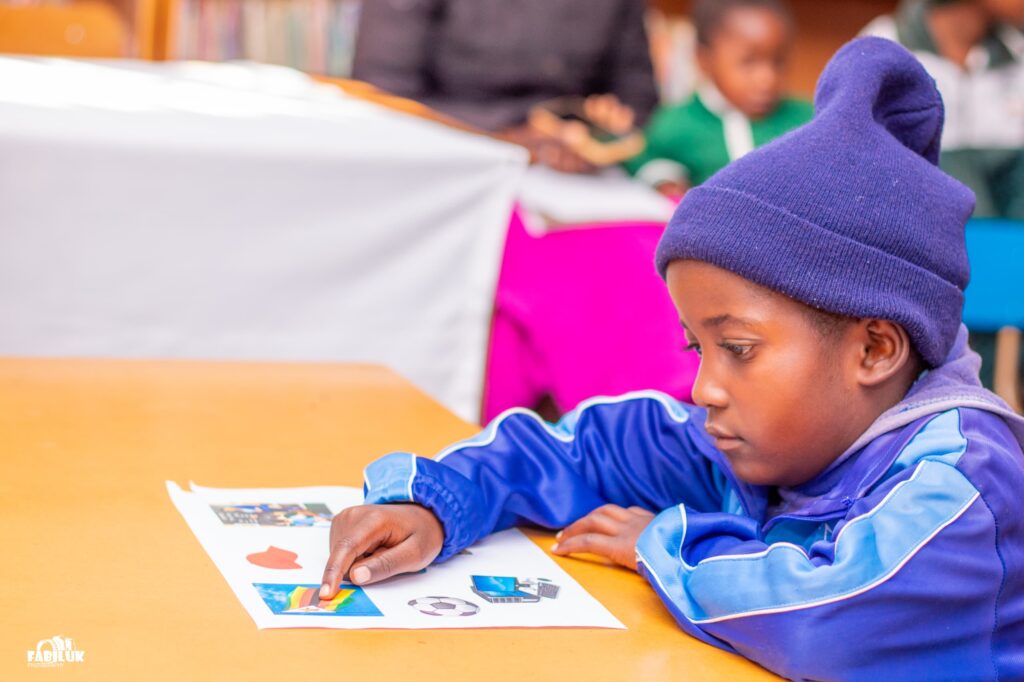
Day 5 – Cluster 5, Sengezane: 10 July
Cluster 5, held at Sengezane, brought together six schools: Ntepe, Bhalula, Vela, Samlodi, Sengezane,
and Bethel Primary Schools, with 45 children and 5 teachers competing.
After a spirited showcase of reading talent, Sengezane Primary School emerged as cluster champions,
securing their place alongside the four schools that had already qualified. At this stage, few could
have predicted just how far this school’s journey would go.
https://www.facebook.com/share/p/18yq1CKZjh/
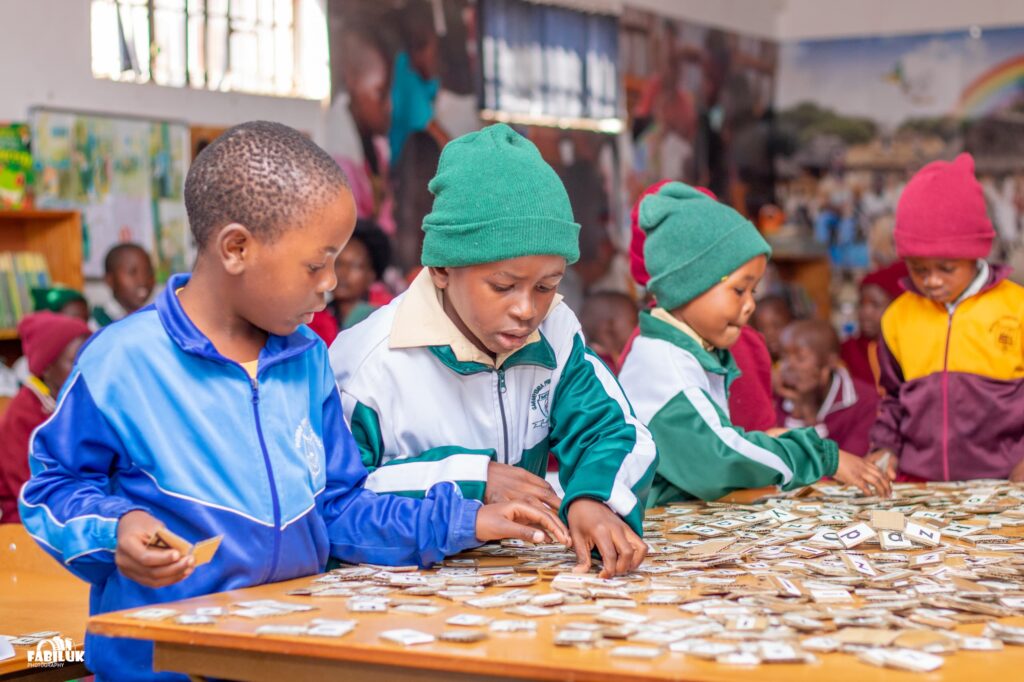
Day 6 – Cluster 6, Buvuma: 14 July
The final cluster round took place at Buvuma, the largest cluster of the competition with seven
schools: Sukwe, Tshanyaugwe, Mpaya, Buvuma, and Selonga Primary Schools among them, along
with 72 children and 8 teachers, the biggest turnout of the entire cluster stage. Dombo Primary School
emerged victorious, completing the lineup of six schools destined for the district finals.
https://www.facebook.com/share/p/1C2mQHicFM/
The Six District Finalists
With the cluster stage complete, six schools had earned their place in the grand finale:
1. Lumene Primary School
2. Dambashoko Primary School
3. Wilikisa Primary School
4. Garanyemba Primary School
5. Sengezane Primary School
6. Dombo Primary School
These six schools would now compete for the ultimate prize: the Starlink Grand Prize, the District
Floating Shield, and gold and silver medals for individual category winners.
The Grand Finale at the EMNT Library
On 17 July, learners, teachers, parents, and community members gathered at the Edward Ndlovu
Memorial Library for the district finals. Officials from the Ministry of Primary and Secondary
Education, who had supported the competitions from the cluster stage onward, were once again on
hand to lend their encouragement and oversight, a reflection of just how seriously the competitions
were taken as a tool for literacy development.The atmosphere was electric as the six finalist schools showcased their reading, language, and
thinking skills through word building, picture identification for the Infants category, vocabulary bee,
spelling bee, a quiz challenge, and a spelling relay. Every activity tested a different dimension of
literacy, and learners rose to the occasion with confidence and enthusiasm.
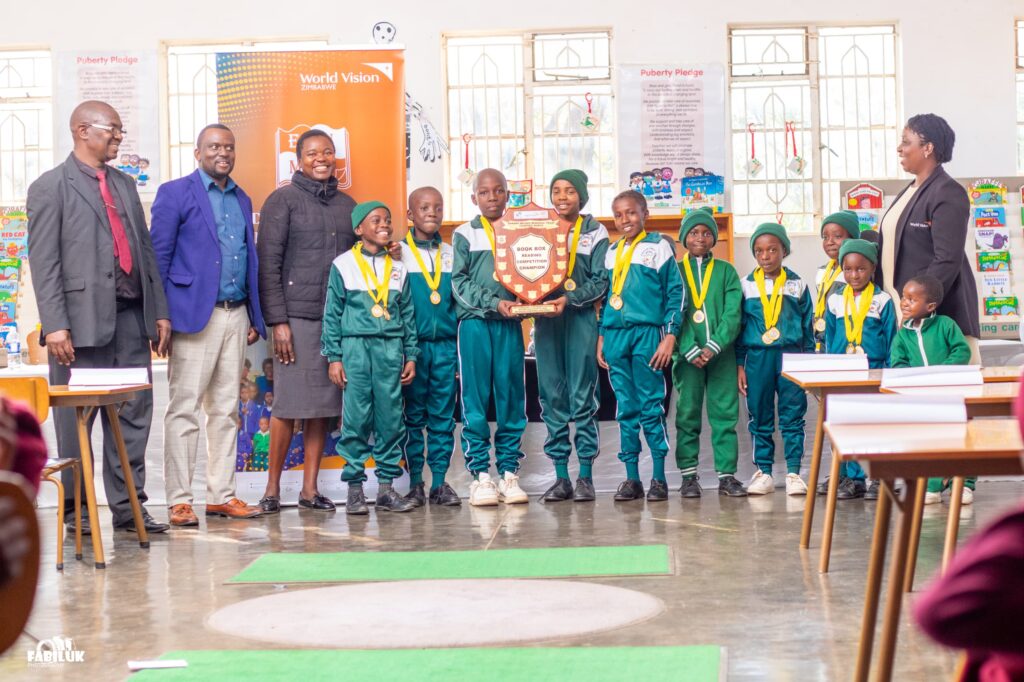
When the results were tallied, Sengezane Primary School stood at the top. Having already claimed the
Cluster 5 title on 10 July, the school carried that momentum all the way to the district championship,
walking away with the Starlink Internet Kit and the prestigious District Floating Shield. The Starlink
kit is more than a trophy. It is a practical, transformative prize designed to help bridge the digital
divide by improving internet access at the school, giving learners in this rural community
opportunities comparable to those available to their urban counterparts.
Garanyemba Primary School, the defending champions who had fought hard to retain their cluster
title, finished as worthy runners-up. Their prize was a valuable consignment of books to strengthen
their school library, ensuring that even more children at Garanyemba will have the chance to discover
the joy of reading in the years ahead.
Beyond the two headline results, individual excellence across every competition category was
recognised, with medals awarded to the standout performers in picture identification, word building,
spelling bee, vocabulary bee, quiz, and spelling relay. Every medal represented weeks of preparation,
practice, and growing confidence among learners who, in many cases, had never before had the
chance to compete on such a stage.
More Than a Competition
As we reflected afterward at ENMT, these competitions were always about more than trophies and
medals. They were about building confident readers, encouraging healthy competition, nurturing
creativity, and inspiring children to dream bigger through the power of books. In rural communities
where access to books and digital resources can be limited, initiatives like this one create a rare and
valuable opportunity for children to shine, to be recognised, and to fall in love with reading.
The scale of participation tells its own story. Across six clusters, well over 300 children and dozens of
teachers took part, each cluster contest fiercely competitive, with margins as tight as a single point in
some cases. That level of engagement, sustained across more than 37 rural schools, speaks to just how
deeply the Book Box programme has taken root in these communities.
Thanking the Partners Who Made It Possible
None of this would have been possible without the generosity and commitment of ENMT’s partners.
Special thanks were extended to Book Aid International, whose sponsorship of books continues to
inspire a love of reading and learning among children in rural Zimbabwe. Their support opens doors
to knowledge and brighter futures for learners who might otherwise have very few books to call their
own.
ENMT also expressed heartfelt appreciation to the Edward Ndlovu Community Libraries, Masana wa
Afrika, and the Trust’s Friends from Sweden, whose unrestricted funding allows ENMT to innovate,
respond to community needs, and sustain literacy and community development programmes exactlywhere they are needed most. And of course, World Vision Zimbabwe’s Mzimuni Area Programme
was a partner throughout, from designing the competition structure to supporting cluster and district
events on the ground.
Congratulations All Around
To every learner who picked up a book, practised their spelling, sounded out new words, and stood up
in front of a room to compete: congratulations. To every teacher who prepared their teams with
patience and encouragement: thank you. To every school that took part, whether they lifted a trophy or
not: well done. And to every supporter, partner, and community member who believes in the
transformative power of reading: your investment is changing lives.
Sengezane Primary School may be the champions of 2026, but as ENMT put it best: today we
celebrated champions, but every child who picked up a book is already a winner.
Readers today. Leaders tomorrow.

Leave a Reply